
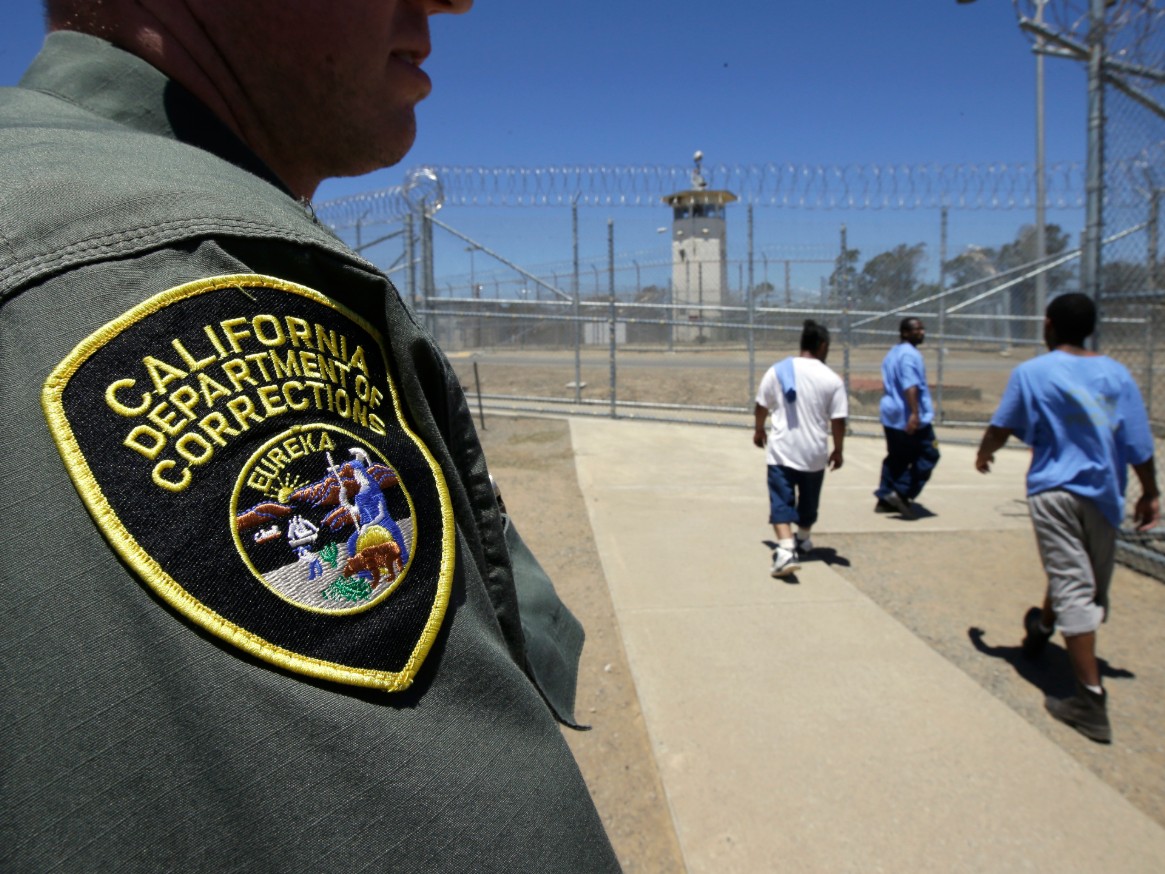
Across the country, correctional systems are grappling with a shared challenge: how to balance declining prison populations with rising operational complexity. Nowhere is this tension more pronounced than in California.
“The job has not gotten easier—if anything, it has become more dangerous.”
A Smaller System, Not a Simpler One
Recent legislative discussions have intensified around reducing correctional expenditures. Lawmakers are weighing options such as expanding single-bed cell housing and closing additional prisons to cut costs.
However, corrections is not a linear system. Costs do not fall proportionally with population, and risk does not decline simply because there are fewer people behind the walls.
In fact, the opposite may be occurring.
Today’s prison population is increasingly composed of individuals who are:
- Higher risk
- More behaviorally complex
- More likely to require mental health intervention
- More resistant to institutional authority
As lower-risk individuals are diverted or released earlier, the remaining population becomes more concentrated and more volatile. The result is a system that is smaller—but far more demanding to manage safely.
Progress on Recidivism—With Operational Tradeoffs
California’s investment in rehabilitation has produced measurable gains. Expanded access to education, vocational training, and reentry programming has contributed to declining recidivism rates, an outcome that benefits both public safety and long-term fiscal stability.
However, these successes do not eliminate the immediate challenges faced inside correctional institutions.
From an operational standpoint, reduced recidivism can coincide with a shifting inmate profile—one that includes a higher proportion of individuals with entrenched criminal histories, institutional behavior issues, and complex mental health needs.
This evolving dynamic places increased pressure on custody staff, who must manage a population that is both smaller and more difficult to supervise.
The Reality Inside: Rising Violence Against Staff
Perhaps the most pressing issue confronting CDCR today is the sharp and sustained increase in inmate violence against staff.
Recent data compiled and analyzed by The Toughest Beat paints a stark picture of current conditions inside California’s prisons.
Monthly staff assault totals consistently reach into the hundreds:
- 402 staff assaults in January 2026
- 390 staff assaults in February 2026
- 392 staff assaults in December 2025
- 327 staff assaults in November 2025
These are not isolated spikes. They represent a persistent baseline of 300–400 assaults per month, with peaks reaching even higher. In August 2025, reported incidents climbed to approximately 460 staff assaults in a single month, marking one of the highest levels on record.
More concerning is the long-term trajectory. Prior to recent reform efforts, CDCR averaged roughly 243 staff assaults per month. That figure has since risen to approximately 359 assaults per month, reflecting an increase of more than 50 percent. Some analyses indicate that staff assaults rose by as much as 72 percent over a 12-month period.
Equally troubling is the severity of these incidents.
Staff are not only facing frequent assaults but increasingly serious ones, including:
- Hundreds of physical attacks in a single month
- Dozens of “gassing” incidents involving bodily fluids
- Multiple attempted murders of correctional officers, including nine reported in one month alone
- At least 42 attempted homicides of staff over a one-year period
Perhaps the most significant takeaway is this:
These increases in violence are occurring despite a declining prison population.
For frontline staff, this reality fundamentally challenges the assumption that downsizing the system leads to safer working conditions.
“A smaller prison system is not a safer one.”
Cost-Cutting Measures and Operational Risk
Closing prisons and expanding single-cell housing may reduce costs, but also concentrate higher-risk populations and require more staffing and infrastructure.
Closing additional prisons may generate savings, but it also:
- Amplifies tension and potential for violence
- Consolidates higher-risk populations into fewer institutions
- Increases density within remaining facilities
Why Sustained Funding Is Essential
In the current fiscal climate, correctional budgets are often viewed as prime targets for reduction. However, for those working inside the system, funding is not an abstract number—it is directly tied to safety.
Adequate funding ensures:
- Safe staffing ratios
- Timely response to incidents
- Access to training and protective equipment
- Maintenance of secure and functional facilities
Conversely, insufficient funding can lead to:
- Increased response times during emergencies
- Reduced institutional control
- Greater exposure to injury for staff
- Higher long-term costs associated with litigation and system instability
It is also important to recognize that the cost of incarceration reflects the full scope of operations, including health care, mental health services, and constitutionally mandated conditions of confinement.
In this context, sustained funding is not excessive—it is necessary to maintain a safe and functioning system.
Aligning Policy With Practice
California’s correctional reforms represent a meaningful shift in philosophy, emphasizing rehabilitation and reduced reliance on incarceration. These goals are important and widely supported across the profession.
However, policy decisions must remain grounded in operational reality.
For policymakers, this means acknowledging that:
- A smaller population does not equate to lower risk
- Institutional violence trends must inform budget decisions
- Cost-saving measures must be paired with adequate reinvestment
For correctional leaders, it reinforces the need to advocate for resources that reflect the evolving demands of the job.
Conclusion
California’s correctional system is at a crossroads. The state has made measurable progress in reducing recidivism and rethinking incarceration, but these gains have been accompanied by new and serious challenges inside its institutions.
The rise in inmate violence against staff is not a marginal issue—it is a central operational concern that must shape future policy decisions.
As discussions around budget reductions and system downsizing continue, one principle should remain clear:
Safety cannot be scaled down.
A smaller correctional system still requires robust investment—particularly when the risks faced by staff are increasing, not declining.
Because ultimately, the success of any correctional reform depends on a simple but critical condition:
The people tasked with maintaining order must be safe enough to do their jobs.
 Rev Red