
This article is an insider’s perspective into the California Department of Corrections and Rehabilitation (CDCR) failure with the Non-Designated Programing Facility (NDPF) programs. There seems to be much misunderstanding regarding NDPF and CDCR’s current policy to force inmates onto NDPF yards.
CDCR Definitions of Housing Assignments:
General Population (GP) – GP facilities house the main body of inmates who are not segregated for disciplinary or protective measures.
Sensitive Needs Yard (SNY) – An SNY houses designated inmates whose safety would be endangered by a portion of the inmate general population. SNY designated inmates shall have documented and verified Systemic Safety Concerns indicating no other viable housing options are available within the inmate general population.
Non-Designated Programing Facility (NDPF) – NDPF houses inmates who demonstrate positive behavior and a willingness to participate in rehabilitative programs and conform to departmental policies, free from Security Threat Group (STG) influence and behavior.
Restricted Housing Unit (RHU) – (RHU) are specialized programming units with established placement criteria designated for inmates not suited for housing in the General Population (GP).
CDCR has historically separated GP inmates from those in SNY for safety and security. Traditionally, those convicted of high notoriety crimes, or who suffered past victimization, or who were former informants or former gang affiliates, were housed on SNY. Over time, the SNY population increased to the point of overcrowding. Additionally, SNY facilities became increasingly violent with their own SNY-gangs. It was all too easy for inmates to move from GP to SNY with many moving only because they owed a drug debt with other GP inmates. In 2017, one-third of CDCR inmates were SNY and CDCR management came to the realization the SNY program was a failure.
To address the SNY failure, CDCR announced an end to all SNY facilities with the goal of reintegrating the inmate population. Facilities became “Designated” (non-programming yards) or “Non-Designated” (program yards for rehabilitation, education, and vocation) facilities. Those who were once mainline had an opportunity to apply for these yards and work their way toward early release. The NDPFs were intended to house SNY and GP inmates together with the ultimate goal of having most of CDCRs inmates housed on these facilities. To most of the GP inmate population, being on a NDPF facility carries the same stigma as being housed on a SNY facility. When asked, most GP inmates consider NDPF just SNY with a different name.
In 2019 there was a large amount of violence when CDCR initially started transferring SNY inmates onto GP facilities (this was done during conversion of these facilities to NDPF). Often this violence included large riots as CDCR was transferring in large numbers of SNY inmates at a time. Several staff members were seriously injured during these NDPF riots to include an August 2019 riot at the California Correctional Center where the GP inmates attacked staff because someone told the inmate population that facility was being converted to a NDPF. The regular scheduled violence continues in CDCR, but to a much smaller, but more routine scale.
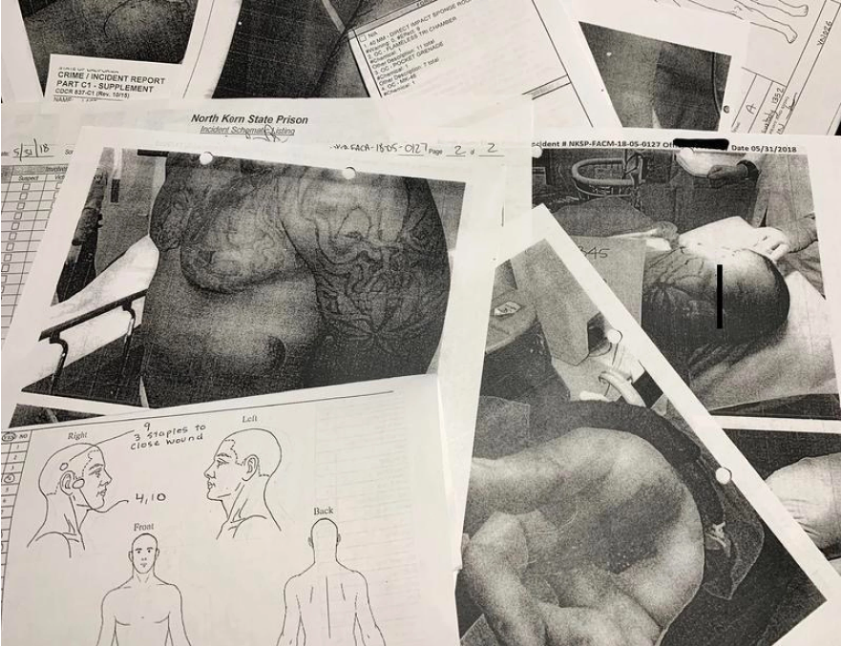
The current process is to bus GP inmates in small numbers to already established NDPF facilities. With scheduled regularity, these GP inmates attack the first NDPF inmate they find on the facility. Often these attacks require staff use of force to quell. The reason GP inmates attack NDPF inmates is solely to be removed from the NDPF and placed onto a GP facility. Not only are these scheduled fights a safety concern, but they are also an administrative burden to staff to get the GP inmates moved to a GP facility. Very often CDCR knows what inmates are going to fight upon arrival to a NDPF as these inmates explain their determination during classification committees. Despite NDPFs definition requiring “willfulness” CDCR forces unwilling GP inmates onto NDPFs until these inmates attack another inmate to get rehoused.
Understandably, there is no excuse for inmates to attack others. As human beings, we should expect people not to attack each other despite GP or SNY association. Moreover, CDCR is not responsible when a GP inmate attacks another random inmate, even if on a NDPF. Afterall, individuals are ultimately responsible for their own conduct. What is important to understand however is that in most occurrences, CDCR staff are fully aware of which inmates are going to fight upon arrival to a NDPF and CDCR refuses to act on this knowledge.
Here is a normal process for scheduled fights in a CDCR NDPF. New inmates in a reception center attends classification committee where the NDPF program is explained to the inmates. Some inmates make is clear they do not intend to program on a NDPF and committee documents the inmates statements. The inmates are transferred anyway to a NDPF with a group of other inmates. When the GP inmates land on the facility, they seek and attack the first NDPF inmate(s) they find on the facility. After the attack, staff rehouse the GP inmate(s) either onto a GP facility or to the RHU pending transfer to a GP facility. The GP inmates get housed where they want with staff and inmates are put at risk for no good reason.
There are several ways CDCR can mitigate this routine violence. CDCR can remove all the GP/SNY/NDPF labels from all the facilities and be just like most other correctional agencies. This would cause some initial issues but works almost everywhere else. CDCR could not force transfer GP inmates into NDPF facilities, especially being NDPF placement is supposed to be voluntary. Lastly and most difficult, CDCR can somehow replace the stigma of NDPFs being associated with SNY inmates.
This author is consistent with the biggest problems in CDCR being the lack of transparency and dishonesty spouted by the department. CDCR currently lies the NDPF program is only used for willing inmates. Moreover, CDCR currently states assignment to NDPFs is made only after careful review of each individual’s case factors, potential safety concerns, and housing/rehabilitation needs to ensure people can safely program together. Inmates are explaining to CDCR they will not safely house on a NDPF and CDCR is forcing them to transfer anyway.
 thetoughestbeat
Dear [Attorney Name],
My name is Christopher Santos. I am requesting legal review of California Department of Corrections and Rehabilitation practices involving non-designated programming facilities (NDPF), yard closures or conversions, unsafe placement conditions, reduced access to programming, and the loss of time credits and rehabilitative opportunities resulting from those conditions.
My concerns are based on personal experience as well as what I believe is a broader pattern within CDCR institutions.
During one of my prison terms, I was placed on a yard that created a serious risk to my safety. The placement exposed me to individuals and conditions that made the yard unsafe for me. Because of that placement, I was put in a position where violence became unavoidable. I had to fight, and as a result, I lost approximately one year of time.
A central issue is that CDCR appears to have moved away from traditional general population programming yards and toward non-designated programming facilities and mixed-placement environments. In practice, these changes appear to have combined groups that historically were not housed together in the same way, while also reducing stable access to programming, jobs, self-help, and other rehabilitative opportunities that had previously existed on general population yards.
In each prison term I served before these changes, the yards I was on had programming and rehabilitative opportunities available to inmates. Over time, I observed that these opportunities were reduced or taken away, while some institutions appeared to shut down or repurpose yards and facilities in ways that pressured inmates to remain in unsafe settings or suffer consequences.
Another major concern is coercion through time-credit consequences. My understanding is that inmates may lose the ability to earn or keep certain credits if they do not remain on the yard or do not continue programming under unsafe conditions. In practical terms, that can force inmates to choose between personal safety and time-credit preservation. In my case, the unsafe placement and resulting conflict directly impacted my time.
I am also concerned that facility closures, yard deactivations, and NDPF-related conversions may have reduced access to rehabilitative programming, inmate jobs, educational opportunities, self-help programs, credit-earning opportunities, and safer housing alternatives.
Based on what I have seen and experienced, I am requesting legal review of whether CDCR’s policies and implementation may have involved unsafe placement practices that exposed inmates to foreseeable harm; denial or reduction of meaningful access to safe programming environments; loss of time credits or disciplinary consequences tied to unsafe housing conditions; facility or yard closures and conversions that disproportionately harmed certain inmates; and possible civil rights, due process, classification, or safety-related violations.
I am currently trying to document specific institutions, facilities, and units that were deactivated, closed, or converted, along with the programming that existed before those changes and what inmates lost afterward. I am also gathering information to determine whether these conditions support broader legal claims or coordinated advocacy.
I would appreciate the opportunity to speak with you about whether there is a basis for legal action, investigation, or other representation regarding these issues. I am prepared to provide a personal timeline, details regarding my housing and placement history, and any additional information I can gather.
Thank you for your time and consideration.
Sincerely,
Christopher Santos
2. Declaration of Christopher Santos
Declaration of Christopher Santos in Support of Legal Review
I, Christopher Santos, declare as follows:
1. I make this declaration based on my personal knowledge. If called as a witness, I could and would testify competently to the facts stated here.
2. I have served three prison terms within the California Department of Corrections and Rehabilitation.
3. During prior prison terms, I observed that general population yards had programming, jobs, and rehabilitative opportunities available to inmates.
4. Over time, I observed changes in yard structure, housing practices, and institutional operations that appeared to reduce or eliminate those opportunities.
5. I also observed the increased use of non-designated programming facilities and other mixed-placement environments.
6. In my experience, these changes created serious safety concerns and reduced access to stable rehabilitative programming.
7. I was placed on a yard that I believed was unsafe for me.
8. The individuals and conditions on that yard created a real and substantial threat to my safety.
9. As a result of that placement, I was forced into a violent situation.
10. I had to fight under those circumstances.
11. After that incident, I lost approximately one year of time.
12. Based on my experience, inmates may be pressured to remain on unsafe yards because refusing placement or refusing to remain on a yard can lead to punishment, discipline, loss of privileges, or loss of time-credit opportunities.
13. In practical terms, this can force inmates to choose between their physical safety and preserving sentence-reduction credits or programming status.
14. I believe these housing and placement practices deserve legal review because they may expose inmates to foreseeable harm while also reducing access to programs, jobs, and other rehabilitative opportunities.
15. I am also concerned that the closure, deactivation, or conversion of yards and facilities has further limited access to safe programming environments.
16. I am seeking legal assistance to determine whether these practices support claims related to unsafe conditions, improper placement, loss of credits, denial of programming access, or other violations of inmates’ rights.
I declare under penalty of perjury under the laws of the State of California that the foregoing is true and correct.